
Tension Headaches: A Holistic Approach to Relief
Tension headaches are one of the most common types of headaches, often described as a dull, aching pressure or a tight band around the head. While stress is frequently blamed, many tension headaches stem from muscle tension, posture patterns, and nervous system overload, especially involving the small but influential muscles at the base of the skull.
For individuals who spend long hours at a desk, studying, or working on screens, these postural stressors can quietly build over time and contribute to recurring headaches.
Understanding the Suboccipital Muscles
The suboccipital muscles are a group of deep muscles located at the base of the skull. They play a critical role in head positioning, stability, and coordination between the head and neck. Research has shown that trigger points and dysfunction in these muscles are commonly associated with tension‑type headaches and increased headache frequency and intensity.
Forward head posture (where the head drifts in front of the shoulders) places extra strain on the suboccipitals and surrounding neck muscles. This posture is common with desk work, prolonged studying, and frequent phone or laptop use, and it has been linked to neck pain and headache development.
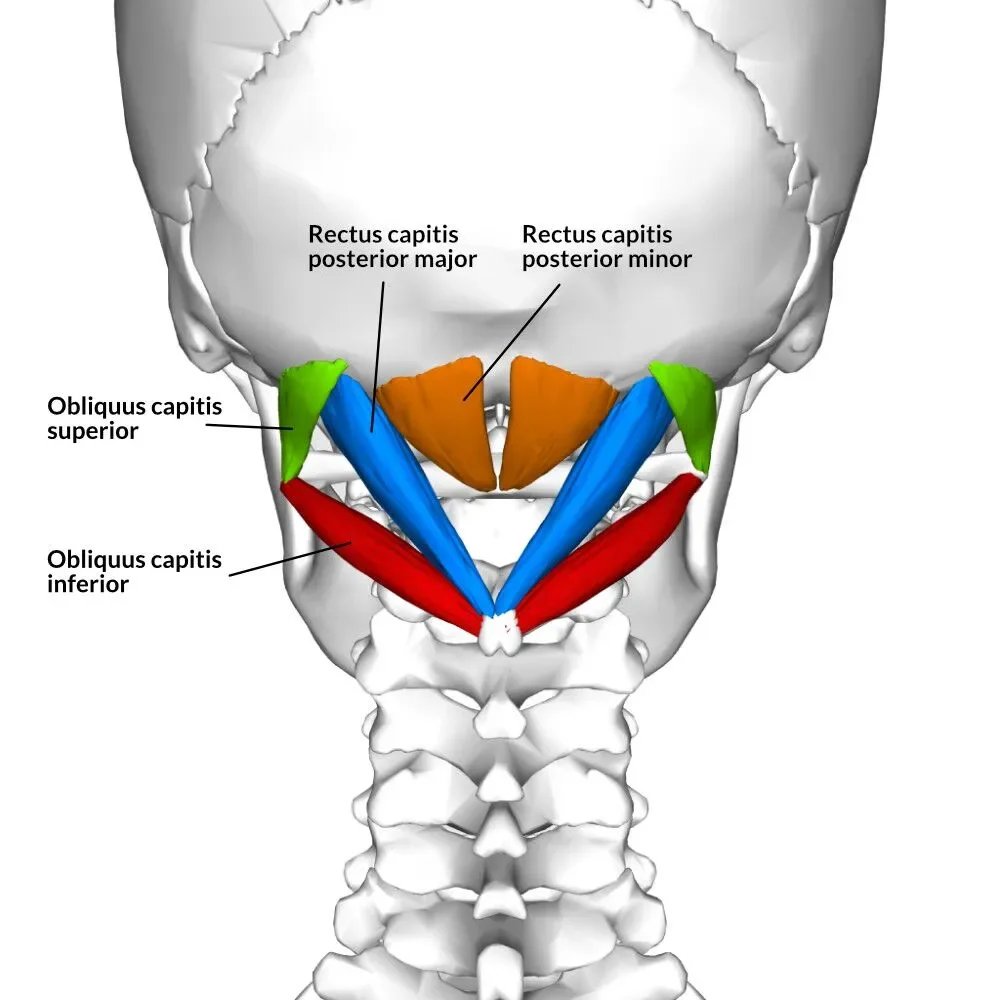
The Suboccipital Muscles
How Posture Contributes to Tension Headaches
When the head shifts forward for extended periods of time:
Suboccipital muscles remain in a shortened, overactive state
Trigger points may develop and refer pain into the head and behind the eyes
Upper trapezius and neck muscles compensate, increasing overall tension
The nervous system remains in a heightened stress response
Over time, this creates a cycle where muscle tension, joint restriction, and stress reinforce one another.
Chiropractic Care and Nervous System Support
Chiropractic care takes a nervous‑system‑centered approach to tension headaches. By addressing joint restrictions in the cervical spine and supporting proper alignment, chiropractic adjustments aim to improve communication between the brain and body.
Research suggests that spinal manipulation and manual therapies may help reduce the frequency, intensity, and duration of tension‑type headaches in some individuals, particularly when posture and muscle tension are contributing factors.
Many patients report additional benefits such as improved neck mobility, reduced muscle tightness, better sleep quality, and improved stress tolerance.
How Cupping Therapy May Help
Cupping therapy is a soft‑tissue technique often used to address chronic muscle tension. By creating gentle suction on the skin, cupping helps increase local blood flow, support lymphatic movement, and release tight or restricted tissue.
While research on cupping is more robust in migraine populations, studies suggest it may help reduce headache pain intensity and improve overall comfort. Clinically, cupping is often used over the upper neck, shoulders, and suboccipital region to support muscle relaxation and recovery.
When combined with chiropractic care, cupping may help address both joint and soft‑tissue contributors to tension headaches.
Additional Holistic Strategies for Headache Relief
Supporting tension headaches often requires a multi‑layered approach:
Posture Awareness
Adjust desk and screen height to reduce forward head posture
Take frequent breaks from sitting and screen use
Gentle Movement & Stretching
Neck mobility exercises
Suboccipital and upper shoulder stretches
Strengthening exercises to promote stability may also be used
Stress & Nervous System Regulation
Slow, diaphragmatic breathing
Mindful movement or walking
Consistent sleep routines
These tools help signal safety to the nervous system and reduce the underlying stress patterns that contribute to chronic tension.
A Whole‑Body Approach to Tension Headaches
Tension headaches are rarely caused by a single factor. Muscle tension, posture, stress, and nervous system regulation all play a role. A holistic approach that includes chiropractic care, soft‑tissue therapies (i.e. cupping) and supportive lifestyle changes can help address the root causes rather than simply masking symptoms.
If headaches are frequent, persistent, or impacting daily life, working with a wellness‑focused provider can help create a personalized plan to support long‑term relief.
Research & References
Fernández-de-las-Peñas C, et al. Trigger points in suboccipital muscles and their relationship to tension-type headaches. Journal of Headache and Pain. https://pubmed.ncbi.nlm.nih.gov/16618263/
Forward head posture and its effects on cervical spine biomechanics. https://en.wikipedia.org/wiki/Forward_head_posture
Castien RF, et al. Cervical musculoskeletal dysfunction in tension-type headache. Manual Therapy. https://pubmed.ncbi.nlm.nih.gov/37268552/
Espí-López GV, et al. Manual therapy and exercise for tension-type headaches. Physical Therapy. https://pubmed.ncbi.nlm.nih.gov/33935056/
Bronfort G, et al. Spinal manipulation for headache. Journal of Manipulative and Physiological Therapeutics. https://pubmed.ncbi.nlm.nih.gov/8775024/
Kim JI, et al. Cupping therapy for headache pain. BMJ Open. https://pubmed.ncbi.nlm.nih.gov/39350928/
NOTE: This post and other blog posts and information on this website is NOT medical advice and for educational purposes only. Please always consult your doctor when making lifestyle changes.